Are Amish Polygamists? What Their Marriage Customs Reveal About Faith, Family, and a Different Way of Life

Are Amish polygamists? If you’ve ever caught yourself wondering this while passing a horse-drawn buggy on a quiet country road or scrolling through photos of their simple way of life, you’re not the only one. The question pops up because their world looks so different from ours—closed communities, plain dress, no flashy technology. It’s easy for curiosity (and a few Hollywood stories) to fill in the blanks with wild ideas. But the real answer is straightforward, and it opens the door to something much deeper about commitment, family, and what truly holds people together.
Let me walk you through this with honesty and care. We’ll clear up the myth, explore how Amish marriage actually works, and see why their approach feels both ancient and surprisingly relevant in a world full of swipe-right dating and broken homes. By the end, you’ll understand not just the facts, but the heart behind them.
Are Amish Polygamists? The Straight Answer You’ve Been Looking For
No. The Amish are not polygamists, and they never have been.
Marriage in their communities has always meant one man and one woman, for life, before God and the church. They see polygamy as adultery—plain and simple. This isn’t a gray area or something that varies by settlement. Across Old Order and other Amish groups, the rule stands firm: one spouse, lifelong covenant.
If you’ve pictured secret wives hidden away or some hidden practice, that image doesn’t match reality at all. Their faith calls them to radical simplicity and obedience to Scripture, and that includes a clear picture of marriage as a sacred, exclusive union. When you understand this, the question “Are Amish polygamists?” shifts from mystery to a beautiful window into their values.
Where the Myth of Amish Polygamy Really Comes From
The confusion usually starts with mixing up the Amish with other religious groups that have practiced plural marriage.
Certain fundamentalist Mormon communities (often called FLDS) did—and some still do—allow men to have multiple wives. Both groups live apart from mainstream society, dress modestly, and value large families and tight-knit communities. From the outside, especially if you’re not familiar with the differences, it’s an easy mix-up. Add in sensational TV shows or old stories, and the myth spreads.
But the Amish come from a completely different root. They trace back to the Anabaptist movement in 16th-century Europe and split into their own group in the late 1600s under leader Jakob Ammann. They emphasize adult baptism, non-resistance (pacifism), and living separate from “the world.” Polygamy never entered their tradition. It contradicts their reading of the New Testament picture of marriage.
You can see how the rumor starts—two plain-dressing, horse-and-buggy-using religious groups get lumped together in people’s minds. Once you know the history, the myth falls apart quickly.
The Biblical Heart Behind Amish Marriage
At the core, Amish marriage flows from their deep love for Scripture. They take passages like Genesis 2:24 (“a man shall leave his father and mother and be joined to his wife, and they shall become one flesh”) and Jesus’ words in Matthew 19 very seriously. Marriage isn’t just a legal contract or a romantic feeling—it’s a covenant mirroring Christ’s love for the church.
This conviction shapes everything. They believe God designed marriage as one man and one woman for a lifetime. That’s why divorce is almost unheard of. It’s not that they’re perfect or never struggle; it’s that they treat marriage as something bigger than personal happiness. The church community steps in to support couples through hard seasons because the vow matters that much.
You might find this old-fashioned or even restrictive at first glance. But when you sit with it, there’s a quiet strength here. In a culture where relationships often feel disposable, their view offers a counter-story: love as steadfast choice, not fleeting emotion.
Courtship Amish Style: How Young People Actually Find Love
Amish young people don’t date the way you might expect. Courtship usually begins in the late teens, often after or around the time of baptism (which happens between about 16 and 23, when someone makes a public adult commitment to the faith).
They meet at church, youth gatherings, singings, or frolics (work parties that double as social time). A young man might offer a girl a ride home in his buggy—that’s often the start. Things stay low-key and private at first. Engagements are usually kept secret until just a few weeks before the wedding.
In more conservative communities, you’ll hear about bundling—a traditional practice where a courting couple spends time together in bed, fully clothed, sometimes with a bundling board or heavy blankets between them. It sounds strange to modern ears, but it’s not about sneaking around. It’s supervised (parents know), focused on real conversation, and rooted in an older European custom. The goal is emotional closeness and testing compatibility without crossing physical lines. Self-control and respect for purity run deep here.
Rumspringa (the “running around” period) gives youth space to experience the outside world before committing to church membership and marriage. Most return, get baptized, and settle into Amish life. It’s not the wild free-for-all some documentaries portray—just normal teenage socializing with higher stakes.
This slower, intentional approach builds something sturdy. No endless swiping or ghosting. Just real people getting to know each other within a shared faith and community.
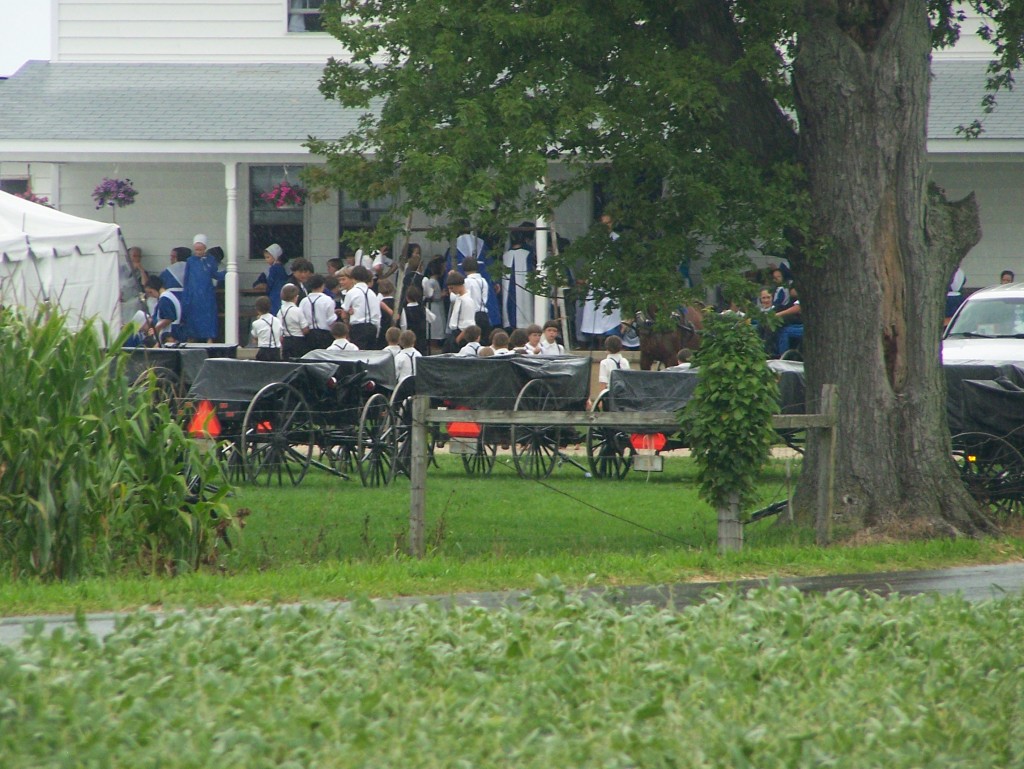
Wedding Day: Simple, Sacred, and Overflowing with Community
Amish weddings happen mostly in the fall, after harvest. They’re big community events—often 300–400 guests—but the ceremony itself stays simple and reverent.
The bride wears a modest new dress (often blue or another solid color, not white), a white cape and apron, and a prayer covering. No diamond rings, no veil, no fancy makeup. The groom wears his Sunday best. The service includes hymns, a sermon, and the couple exchanging vows in front of the bishop and congregation. It’s short, focused on God’s word, and deeply meaningful.
Afterward comes the feast—long tables groaning with roast chicken, mashed potatoes, gravy, salads, pies, and more. Amish women are legendary bakers and cooks, and the whole church pitches in. There might be games or visiting late into the evening. The newlyweds often spend their first night at the bride’s parents’ home before moving into their own place (built or prepared by the community).
No expensive honeymoon. No lavish displays. Just family, friends, good food, and the start of a new household rooted in faith. It feels joyful and grounded all at once.
Life After the Vows: Roles, Large Families, and Lifelong Partnership
Once married, Amish couples step into traditional roles that have sustained their communities for generations. The husband is seen as the spiritual head and primary provider—often farming, woodworking, or running a business. The wife focuses on home, children, and nurturing the family.
This can look rigid from the outside, but inside it often brings clarity and peace. Many Amish women also contribute through quilting, baking, or small businesses, and decision-making happens with mutual respect. The emphasis is on teamwork and biblical order rather than power struggles.
Children are viewed as blessings from God. Families tend to be large—six, seven, or more kids is common—because they welcome life and because farm or business life benefits from helping hands. Extended family and the broader church community share the load. Grandparents, aunts, uncles, and neighbors all pitch in. It truly takes a village, and that village shows up.
You can feel the difference when you learn how they weather storms. No quick escape through divorce. Problems get worked through with prayer, counsel from ministers, and practical support. The goal isn’t perfection—it’s faithfulness.
When Life Brings Loss: Remarriage and Widowhood
If a spouse dies, remarriage is allowed and sometimes encouraged, especially if there are young children. There’s usually a respectful waiting period, but life moves forward. Widows and widowers often find new partners within the community. The church wraps around grieving families with meals, help, and emotional support.
This reflects their view that marriage is good and family life matters. It’s not about replacing someone—it’s about continuing to build a life of faith and care.
Other Common Questions About Amish Relationships
You might also wonder: Are marriages arranged? Mostly no. Young people choose their own spouses, though they seek parental and church blessing. Compatibility in faith and values matters hugely.
What about divorce? Extremely rare. It goes against their understanding of Scripture and can lead to serious church discipline. Couples are expected to work through difficulties.
Adultery? Treated as serious sin. It violates both the Bible and the Ordnung (the community’s shared guidelines). Confession, repentance, and accountability are the path forward. The community takes holiness seriously because they believe it protects everyone.
Same-sex relationships? Not accepted. Marriage is understood as between one man and one woman according to their biblical convictions. People struggling with same-sex attraction would receive counsel to live according to their faith’s standards.
Marriage to outsiders? It happens, but rarely. The non-Amish person is usually expected to convert, learn the language (Pennsylvania Dutch), and fully join the community. Shared faith and lifestyle are non-negotiable for a lasting Amish marriage.
What Amish Marriage Teaches Us in a Modern World
You live in a time of record loneliness, high divorce rates, and relationships that often feel like temporary arrangements. The Amish way isn’t perfect—no human system is—but it offers a powerful contrast. Their marriages are built on shared faith, community accountability, intentional courtship, and a refusal to treat vows as optional.
You don’t have to trade your smartphone for a buggy to learn something here. Their story invites you to ask better questions: What would it look like to treat marriage as sacred? How can we build stronger support around families? What does real commitment cost—and what does it give back?
Curiosity about the Amish is natural. Their choice to live differently makes us examine our own assumptions. Respecting that difference doesn’t mean copying everything. It means recognizing that another path exists—one centered on faith, family, and faithfulness through every season.
So, Are Amish Polygamists? The Clear Truth and Why It Matters
To directly answer the question you came here with: No, the Amish are not polygamists. They never have been. Their marriages reflect a deep conviction that one man and one woman, joined for life in covenant before God, is the design they’re called to follow.
The myth usually comes from mixing them up with other groups or from sensational stories that don’t match reality. When you look closer, you find a people who value simplicity, community, and lifelong commitment in ways that challenge and inspire.
Whether you’re exploring different cultures, thinking about your own relationships, or just love learning how others live, the Amish story has something to offer. It reminds us that strong families don’t happen by accident—they’re built with intention, faith, and a willingness to stay when things get hard.
If their approach makes you curious or even a little convicted about what commitment really means, you’re not alone. Many people feel the same pull toward something deeper when they encounter this way of life.
What part of Amish marriage or family life surprised you most? Or maybe you have another question about their traditions? I’d love to hear your thoughts—drop them below. The more we understand each other’s stories, the richer our own become.
Thanks for reading with an open heart. May it leave you with a little more respect for the quiet strength found in lives lived differently.