
Types of Amish: Exploring the Rich Diversity Among Different Amish Groups and Communities
If you're curious about the types of Amish, you quickly discover there's far more variety than the postcards and movies ever show. The types of Amish aren't a single, uniform way of life. Instead, they're a living tapestry of faith, family, and conviction, woven differently across dozens of affiliations and settlements. When you take time to understand these differences, you start to see real people making intentional choices about what matters most in a noisy, fast-changing world.
You might picture every Amish person the same: horse-drawn buggies, plain dark clothes, big families, and quiet farms. That image captures something real, especially for the largest groups. But step closer, and you'll notice subtle (and sometimes not-so-subtle) distinctions in how they dress, what technology they allow, how they worship, and even how they raise their teenagers. These aren't random quirks. They grew out of heartfelt disagreements over how best to live out their Christian faith in community.
The truth is, the types of Amish reflect generations of people who care deeply about protecting their values. Whether you're drawn to their simple living, their strong families, or just want to understand the neighbors you see at the farmers market, learning about these groups helps you see them as individuals instead of stereotypes. Let's walk through it together.
A Brief History: Why So Many Types of Amish Exist
The Amish story begins in Europe in the late 1600s with a split among Anabaptists. Jacob Ammann and his followers believed the church needed stricter discipline, especially around shunning (avoiding close contact with those who left the faith). That conviction carried across the ocean to Pennsylvania in the early 1700s.
Over the next centuries, as America industrialized, Amish churches faced the same questions again and again: How much modern technology is too much? How should we handle young people testing the boundaries? Should we emphasize personal assurance of salvation or humble hope? When answers differed, new groups formed. These weren't angry fights in most cases. They were sincere efforts to stay faithful.
By the late 1800s, the big divide created what we now call Old Order Amish (the more traditional path) and Amish Mennonites (who leaned progressive and eventually dropped "Amish" from many names). In the 1960s another major split birthed the New Order Amish. The Beachy Amish Mennonites emerged earlier in the 20th century with their own direction.
Today scholars count over 40 different Amish affiliations — loose networks of congregations that share similar standards and fellowship with one another. Some are tiny (just a couple districts). Others, like the Lancaster affiliation, span many states with hundreds of districts.
You see the same pattern everywhere: a group feels the current rules no longer protect what they value, or they feel called to a slightly different expression of faith. They pray, discuss, and sometimes part ways — always hoping to honor God.
Old Order Amish: The Heart of Traditional Types of Amish
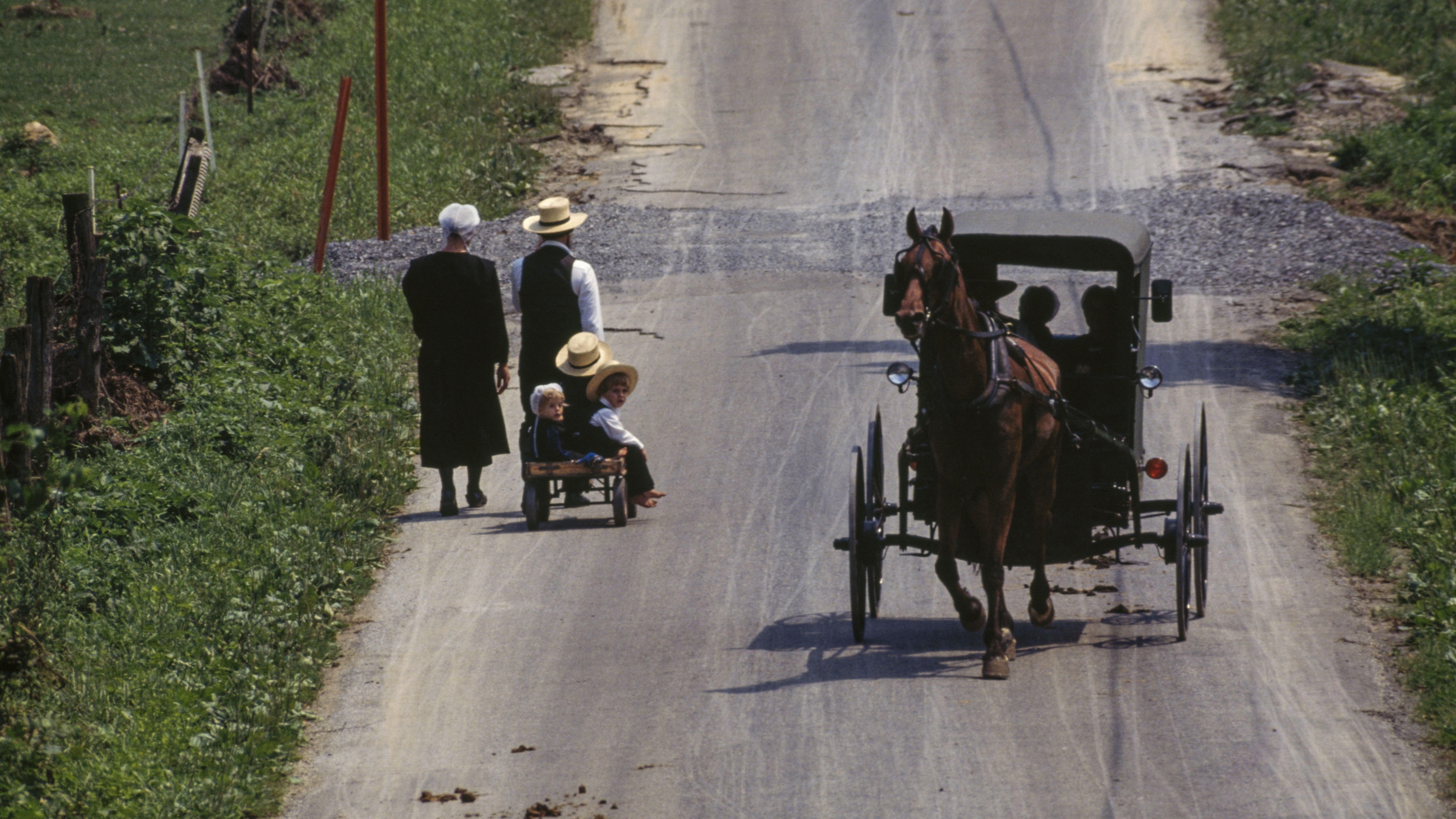
When most people say "Amish," they're thinking of Old Order Amish. This is the largest category among the types of Amish, with well over 300,000 members across North America and growing fast thanks to large families and high retention in many communities.
Old Order Amish generally:
- Use horse-and-buggy transportation (no personal cars)
- Avoid public utility electricity in homes
- Worship in homes every other Sunday (they're sometimes called "House Amish")
- Speak Pennsylvania Dutch (a German dialect) at home and in church
- Practice adult baptism, nonresistance (pacifism), and some form of shunning for serious unrepentant sin
- Value humility, manual labor, and separation from "the world"
But even within Old Order, the types of Amish vary more than outsiders expect. Local Ordnung (the unwritten rules of the church district) shape everything from buggy lights to beard length to whether screens are allowed on windows.
Swartzentruber Amish: One of the Strictest Types of Amish

Among Old Order groups, the Swartzentruber Amish often stand out as the most conservative. They formed from a split in Holmes County, Ohio, around 1913–1917. Today they live in many states but keep very distinctive practices.
You might notice their farms look a bit more rugged — dirt drives instead of gravel, fewer bright colors, and homes that prioritize function over appearance. Their clothing tends toward darker, plainer fabrics. Buggies often lack the bright orange slow-moving vehicle triangle many other Amish use; they prefer reflective tape or lanterns. Technology use stays minimal — no indoor plumbing in many homes, limited or no power tools in some cases, and very cautious interaction with the outside world.
Swartzentruber families often feel deeply called to preserve the "old ways" as closely as possible. Their youth still experience rumspringa (the running-around period before baptism), but the boundaries feel tighter. Shunning, when it happens, tends to be stricter. Many outsiders find their lifestyle challenging, but for them it represents faithful obedience.
Other conservative Old Order affiliations include the Nebraska Amish (known for white shirts only for men, no bonnets on women in some cases, and very plain homes) and certain Swiss Amish groups that speak a different German dialect and use open buggies.
Mainstream Old Order: Lancaster, Holmes, and Elkhart-LaGrange
On the other end of the Old Order spectrum you'll find larger affiliations like Lancaster County (Pennsylvania), Holmes County (Ohio), and Elkhart-LaGrange (Indiana). These are still very much Old Order — horse and buggy, no public electricity, plain dress — but they tend to allow a bit more practical technology within the rules.
You'll see battery lights on buggies, some pneumatic tools, indoor plumbing in many homes, and slightly more colorful fabrics in some districts. These groups often have thriving businesses selling furniture, baked goods, and produce to the public. Their schools go through eighth grade, after which most young people learn trades or work on the family farm.
The key point? Even these "mainstream" Old Order groups still draw a clear line against cars, television, internet in the home, and many other conveniences most of us take for granted. The goal remains the same: a life centered on faith, family, and community rather than individual comfort or status.
New Order Amish: A Different Expression Among Types of Amish
In the mid-1960s, some Old Order families in Ohio and elsewhere felt called to a slightly different path. They became known as New Order Amish. Don't let the name fool you — they're still horse-and-buggy people who dress plainly and avoid most modern entertainment. But they made intentional changes that set them apart from other types of Amish.
New Order groups generally:
- Emphasize personal Bible study and a more evangelical flavor of faith
- Often allow limited technology (some tractors in the field, certain battery or solar setups, telephones in some homes or shops)
- Take a gentler approach to shunning and church discipline
- Discourage or forbid the practice of bundling (a traditional courtship custom)
- Sometimes express more confidence in assurance of salvation
Many New Order youth still go through a form of rumspringa, but the church provides more structured guidance and encouragement toward faith. Some New Order communities have seen lower retention rates because the boundaries feel a little more permeable — young people can more easily move into Beachy or Mennonite circles if they choose.
If you spend time with New Order families, you might sense a warmer, more expressive faith alongside the same deep commitment to plain living. They're proof that even within horse-and-buggy Amish life, there's room for different convictions about how to follow Jesus.
Beachy Amish Mennonites: Progressive Among the Types of Amish
The Beachy Amish Mennonites (sometimes just called Beachy Amish) represent one of the more progressive branches that still carry Amish roots. They broke away earlier in the 20th century, largely over issues of evangelism and church practice.
What makes them different from other types of Amish?
- They drive cars and use public electricity
- They worship in meetinghouses rather than homes
- Many use English in services and have Sunday school and Bible schools
- They support missionary work
- They generally do not practice social shunning
- Clothing remains modest but is no longer "Plain" in the traditional Amish sense
Beachy groups feel like a bridge between Old Order Amish and more assimilated Mennonite churches. You'll still see head coverings on women and beards on married men in many congregations, and they reject television and certain worldly influences. But daily life looks much closer to that of conservative Mennonites or even other evangelical Christians.
Some people who grew up Old Order and wanted more freedom or different ministry opportunities have joined Beachy churches. Others appreciate the combination of Anabaptist roots with greater engagement in the wider world.
How to Tell the Types of Amish Apart (Practical Clues)
When you visit Amish country or see Amish people in town, here are some things that often signal which group you're looking at:
- Buggies: Color (black, gray, brown, even yellow in places), lights (bright battery vs single lantern), and safety features (orange triangle or not).
- Clothing: Fabric colors and patterns (very dark and somber vs brighter blues, greens, or pinks), hat styles, beard length and grooming, prayer covering styles.
- Homes and farms: Presence of electric lines or solar panels, indoor plumbing visible, condition of yards and drives, types of farm equipment.
- Language and worship: Pennsylvania Dutch vs other German dialects vs English services; home worship vs meetinghouses.
- Interaction: Some groups are more open to friendly conversation with outsiders; others keep more distance.
Remember, these are generalizations. Even within one affiliation, individual districts can have slight variations. The best way to learn is with respect — ask permission before taking photos, buy their products, and listen more than you talk.
What All Types of Amish Still Share
Despite the beautiful diversity among the types of Amish, certain core convictions run through nearly all of them:
- Adult baptism and voluntary church membership
- Nonresistance and refusal of military service
- Emphasis on community over individualism
- Plain dress as a witness against vanity and conformity to the world
- High value on family, children, and intergenerational living
- A desire to live simply so they can focus on what truly matters
These shared roots are why even quite different groups can sometimes still fellowship or work together on practical matters. At the deepest level, they all trace back to the same Anabaptist desire to follow Jesus radically in everyday life.
Common Questions About Types of Amish
How many types of Amish are there really? It's hard to pin down an exact number because new affiliations can form and definitions vary. Scholars have identified over 40 affiliations with shared history and similar Ordnung. Add in unaffiliated congregations and the number grows.
Which is the strictest type of Amish? Many point to the Swartzentruber Amish or certain Nebraska Amish groups as the most conservative in technology use, dress, and separation from the world. "Strictest" depends on what you measure — some groups are stricter on technology, others on youth behavior or shunning.
Do all Amish avoid technology completely? No. While Old Order and New Order groups largely avoid public electricity and cars, allowances for batteries, solar, pneumatic tools, and even limited phones vary widely. Beachy groups use cars and electricity freely.
Can people leave one type of Amish for another? Yes, though it depends on the specific churches involved. Some moves are relatively smooth; others involve painful separation from family and community. Many who leave eventually return or find a different Anabaptist group that fits better.
Are Beachy Amish the same as Mennonites? They're closely related and often grouped with Amish Mennonites. They share Anabaptist theology but have distinct histories and practices. Many Beachy people have Amish ancestry within a generation or two.
Why Understanding Types of Amish Matters
You don't have to agree with every Amish rule to respect the sincerity behind them. When you learn about the different types of Amish, you move from stereotypes to real appreciation. You see fathers teaching sons to work with their hands, mothers passing on faith and practical skills, and communities choosing to slow down so they can actually be present with one another.
In a world obsessed with more — more speed, more stuff, more noise — the various types of Amish offer a quiet counter-witness. Some versions feel almost untouched by modernity. Others have adapted while keeping the heart of plain faith. All of them challenge us to ask: What am I willing to give up so I can hold onto what truly matters?
Conclusion: The Beauty in the Variety of Amish Ways
At the end of the day, the types of Amish remind us that sincere faith doesn't look exactly the same everywhere. From the strictest Swartzentruber communities to the more progressive Beachy groups, from traditional Old Order heartlands to New Order expressions of evangelical warmth, each affiliation represents real people trying to live faithfully according to their convictions.
You don't have to move to Amish country or adopt their lifestyle to learn from them. You can let their example of intentional community, strong families, and courage to be different inspire your own choices — whatever they look like.
The next time you see an Amish buggy on the road or shop at an Amish market, remember: behind that simple exterior is a rich, diverse world of faith lived out in dozens of beautiful variations. The types of Amish aren't about rules for rules' sake. They're about people who have decided, generation after generation, that some things are worth protecting at any cost.
If this exploration of the types of Amish has sparked your curiosity, take time to visit respectfully, read more from Amish authors when possible, or simply reflect on the quiet power of a life centered on faith and family. There's wisdom here worth noticing.
What part of Amish life or the different types of Amish intrigues you most? I'd love to hear your thoughts — because understanding each other, even across very different worlds, is one of the best things we can do.

.png)


