The Amish Schoolhouse: One Room, Many Lessons – Reflections from a Woman Who Grew Up There and Later Chose a Different Path
I can still hear the bell. It wasn’t electric. It was a simple hand bell that our teacher rang from the front step of the white schoolhouse on the edge of our Lancaster County community. The sound carried across the fields and brought us running from every direction—boys and girls in our plain clothes, lunch pails in hand, ready for another day of lessons that felt both ordinary and deeply important.
My name is Naomi Rose Miller. I am 29 now. I grew up Old Order Amish, attended our community schoolhouse until eighth grade, and left the life I knew at 28 with my two young children, Emma and Ethan. Today I write and speak about the journey of honoring where you come from while finding the courage to ask questions and choose your own way. The Amish schoolhouse sits at the center of that story for me.
It was more than a building. It was where we learned to read and write, where we practiced our faith in daily prayer, and where the values of simplicity, community, and separation from the world were woven into every lesson. It was also the place where some of my earliest questions began to stir—questions that eventually led me down a road my parents, my husband at the time Sam Fisher, and my closest friends like Ruth Stoltzfus could not fully walk with me.
In this post I want to take you inside the one-room schoolhouse of my childhood. I will share what it looked like, how our days unfolded, what we learned and what we did not, and how those years continue to shape the mother and woman I am today as I raise Emma and Ethan with both deep respect for my roots and a wider openness to the questions that once felt dangerous.
The Building That the Community Built Together
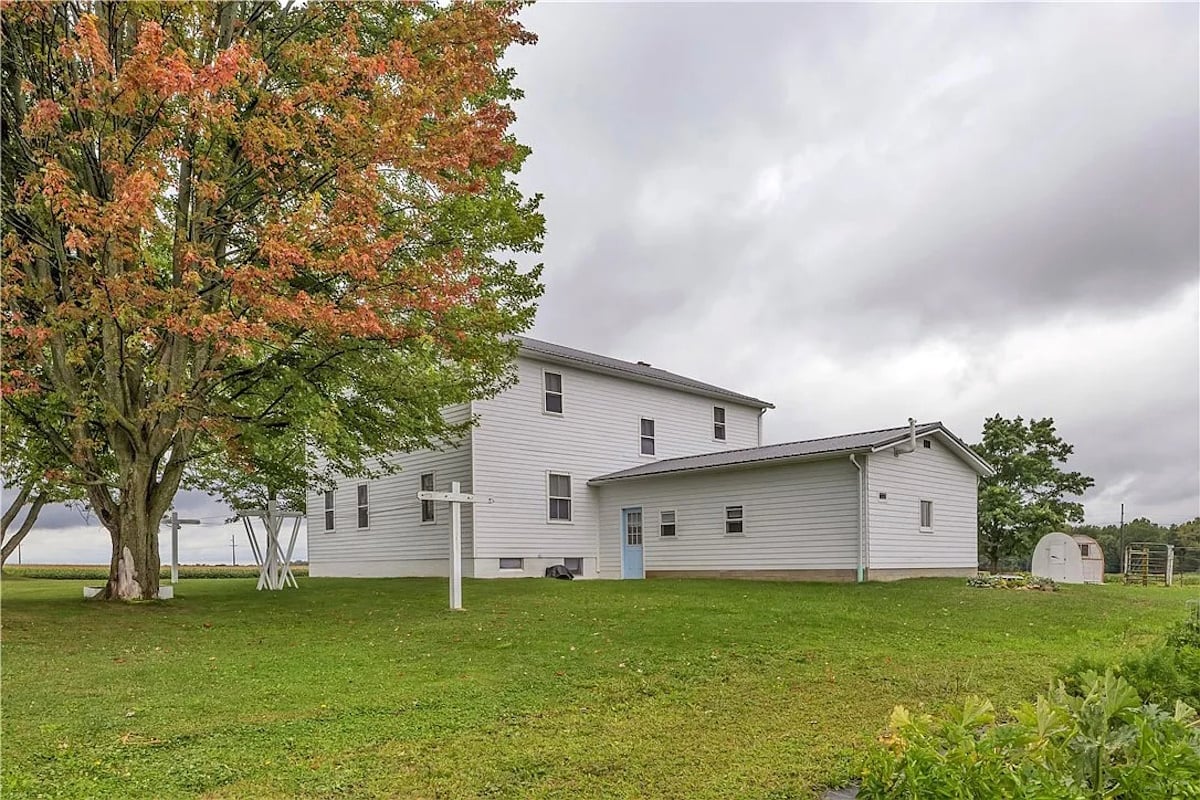
Our schoolhouse was a simple white structure with a dark roof, set back from the road on land donated by one of the farming families. It had been raised by the men of our church district—my father Jacob among them—using timber from local trees and the same careful craftsmanship that went into our barns and homes. No government money. No outside contractors. Just neighbors working side by side because educating our children in our own way mattered that much.
Inside there was one large room. Wooden desks and benches made by local carpenters like my brother David when he grew older filled the space. A teacher’s desk stood at the front near a blackboard. Charts with letters, numbers, and Bible verses hung on the walls. A wood stove kept us warm in winter. There were no computers, no projectors, no fluorescent lights. Everything was handwritten. Our wicker baskets—woven by skilled hands in the community—held papers and supplies.
Grades one through eight sat together. A curtain or low screen sometimes divided the younger children from the older ones during certain lessons, but mostly we learned side by side. My older brother Samuel sat a few rows ahead of me when I started. My sister Rebecca came later. The closeness of ages and the mixed classroom taught us patience and helped the older children naturally become helpers to the younger ones.
I remember the smell of the wood floor and the way sunlight came through the windows in long dusty beams. It felt safe. It felt like ours. The building itself reflected the material culture I have written about before—functional, made by hand, meant to last, and free of anything that might pull our attention away from faith, family, and community.
A Typical Day Inside Those Walls
School began with the bell and a prayer. We stood together, heads bowed, and thanked God for the day, for our families, and for the chance to learn. There was no separation between learning and faith. They were the same thing.
Our teacher—almost always a young unmarried woman from the community—led us through the morning. We worked on reading, writing, and arithmetic every day. English was taught as a second language; Pennsylvania Dutch was the language we spoke at home and often in the classroom for explanations. My mother Sarah sometimes slipped me extra books or quietly encouraged me to ask questions about the stories we read. She did it gently, knowing that too many questions could be seen as trouble.
Recess was loud and joyful. We played outside in the grass and under the trees—tag, softball, and games the older children taught the younger ones. Boys and girls played together more often than people outside our world might expect. My friend Ruth Stoltzfus and I would sometimes sit with handmade dolls or jump rope while the boys ran races. Those moments of play taught us cooperation and gave us space to be children before we stepped into the responsibilities of adulthood.
Lunch was simple—sandwiches or leftovers from home, eaten at our desks or outside when the weather allowed. Afternoons brought more lessons, perhaps geography or history told from our own perspective, always with an emphasis on our faith and the way our people had chosen to live separately for generations.
The teacher moved between groups, helping the little ones with their letters while the older students worked on more advanced arithmetic or copied passages from the Bible. There was a rhythm to it that felt steady and predictable. We knew what was expected. We knew our place.
The Young Women Who Taught Us
Our teachers were rarely much older than the oldest students. They were usually in their late teens or early twenties, unmarried, and chosen by the community because they were seen as steady and faithful. Some of them had been my playmates or older girls I looked up to during youth gatherings.
I remember one teacher in particular who had a gentle way of explaining things. She never scolded curiosity outright, though she gently steered us back to the approved lessons when questions wandered too far. Years later I wondered if she had questions of her own that she kept carefully hidden, the way many of us learned to do.
Teaching was seen as good preparation for the life most young women would eventually lead—marriage, motherhood, and running a household. It gave them responsibility and a small taste of leadership within the boundaries of our traditions. I respected those teachers deeply. They worked hard for very little pay, driven by a sense of service to the community.
At the same time, I now see how the system limited what they themselves could learn or become. A young woman with a gift for teaching or a hunger for more knowledge had few paths forward beyond eighth grade and marriage. That reality sits differently with me now that I have a daughter of my own.
What We Learned and What Stayed Outside the Door
We learned the essentials well. Reading, writing, and arithmetic were solid. We knew our Bible stories and our own history as a people who had crossed oceans to live according to conscience. We understood practical things—how to behave in church, how to work hard, how to value community over individual ambition.
What we did not learn was also deliberate. Science that contradicted a literal reading of Genesis stayed outside. Detailed world history that might raise uncomfortable questions about power or change was not emphasized. Modern ideas about careers, technology, or different ways of organizing family and society were absent by design.
This was not because our teachers were ignorant. It was because the schoolhouse existed to prepare us for life inside the Amish community, not outside it. The goal was not to equip us to question or to leave. The goal was to strengthen the bonds that kept us together.
My mother Sarah understood my curiosity even when she could not fully encourage it in public. She would sometimes read with me at home or let me linger over a story. Those quiet moments planted seeds. My father Jacob showed his support through practical pride—he wanted his children to be able to read the Bible for themselves and manage the farm accounts. He did not push for more, but he did not crush the questions either.
Why Eighth Grade Was the End
In our world, formal schooling stopped after eighth grade. This was not seen as a lack. It was seen as enough. We had the tools to read, write, and calculate what we needed for farming, homemaking, business within the community, and raising faithful children. Further education was viewed as unnecessary and potentially dangerous—something that could pull young people toward pride, worldly ideas, and separation from family and church.
The United States government has long respected this choice for religious reasons, allowing Amish children to complete their education at eighth grade. Most of us accepted it without complaint. We moved into full participation in farm and household work, courtship, and eventually marriage.
I accepted it too, for many years. But as I grew older and my questions about the world beyond our white schoolhouse grew louder, I began to wonder what more I might have learned. When I left at 28, I felt the gap acutely. My practical skills—sewing, baking, gardening, caring for children—served me well. My ability to navigate bank accounts, technology, and wider systems of education and work did not. My friend Michael Carter, who had known me since we were young, helped me fill those gaps with patience and kindness. I am grateful every day for that help.
The Schoolhouse as the Heart of Community Life
Beyond lessons, the schoolhouse was a gathering place. Parents helped with maintenance. Families took turns providing wood for the stove or cleaning. Special events—Christmas programs, end-of-year picnics, school visits by parents—brought everyone together. These moments reinforced that education belonged to all of us, not just the children or the teacher.
My siblings and I walked or rode together. Samuel was already helping on the farm by the time I started school. David’s carpenter skills later contributed to repairs and furniture. Rebecca followed in my footsteps a few years behind. The schoolhouse connected our family across ages and roles.
It also connected us to our friends. Ruth Stoltzfus and I shared desks and secrets. Miriam King and others from quilting circles had been schoolmates too. The bonds formed in that one room lasted into adulthood and still mean something to me, even across the distance I have traveled.
Raising My Own Children: What I Carry and What I Add
Emma is five now and full of questions. Ethan is four and already loves helping with simple chores the way I once did. They do not attend an Amish schoolhouse. Their world includes more books, more conversations about different ideas, and the freedom to imagine futures I never considered at their age.
Yet I still teach them the values the schoolhouse gave me. We pray together. We value hard work and simple pleasures. We talk about faith and community. I want them to know the stories of their Amish grandparents—Jacob and Sarah, the farm, the blue doors, the one-room school—and to respect that heritage even if they choose different paths.
What I add is permission to ask. I tell them that questions are not rebellion. They are part of growing into the person God made you to be. I want Emma to know that her voice matters and that she can learn as much as her curiosity allows. I want Ethan to understand that strength includes gentleness and the courage to change when change is right.
This balance is not always easy. Some days the guilt of having left still whispers that I am taking something precious from them. Other days I feel clear that giving them both roots and wings is the most loving thing I can do.
Looking Back with Honesty and Love
The Amish schoolhouse shaped me in ways I will always cherish. It taught me to work steadily, to value what is made by hand, to put community first, and to find beauty in simplicity. It gave me friends who knew me from the beginning and a faith that still anchors me even when the form of that faith has changed.
It also left gaps. Gaps in knowledge about the wider world. Gaps in practice with asking hard questions out loud. Gaps in imagining that a woman could choose a life different from the one laid out for her.
When I left, I carried those gaps with me along with the strengths. Learning to fill them has been part of my own education—the one that continued long after eighth grade.
I do not regret the schoolhouse years. I regret only the years I spent silencing my own questions out of fear. That fear is what I most want to spare my children.
An Invitation to Understand and to Question
If you grew up in an Amish schoolhouse, or if you have driven past those simple white buildings and wondered what happens inside, I hope this reflection has given you a clearer picture. It is a world of order, faith, and deep care for children. It is also a world that asks its young people to accept limits on knowledge and possibility in exchange for belonging and certainty.
Both the beauty and the cost are real.
As someone who has lived on both sides, I can say with honesty that the schoolhouse gave me roots that still hold me. It also could not contain the questions that eventually led me out. I honor both truths.
My life motto remains: “The hardest journey wasn’t leaving the Amish community. It was learning who I was after I left.”
If you are navigating your own questions about education, tradition, faith, or belonging—whether you come from an Amish background or simply feel drawn to these stories—I am here. The schoolhouse taught me to value community. My journey since has taught me that real community can also make room for honest searching.
Thank you for reading. May your own path, whatever it holds, be marked by both deep roots and the courage to keep growing.