Are the Amish German? Discovering the Deep Roots of Their Heritage and Language
.png)
You’ve probably caught yourself wondering — are the Amish German? — while watching a horse-drawn buggy roll past rolling fields or hearing about their plain way of life. It’s a question that keeps coming up because their story sits at the crossroads of European history, American immigration, and a deliberate choice to hold onto something older and deeper. The short answer? Their roots run straight into German-speaking soil, but the full picture is richer, more surprising, and deeply human than any quick label suggests.
If you’re curious about cultures that quietly resist the pull of modern speed, or you’ve ever felt drawn to stories of people who choose faith and community over convenience, this one’s for you. Let’s walk through it together, step by step, so you can see exactly where they came from, how their language evolved, and why the “German or Dutch?” confusion still lingers today.
Are the Amish German? Their European Story Begins in Faith and Persecution
To really answer “are the Amish German?”, we have to go back centuries — long before any ship crossed the Atlantic. The Amish story starts with the Anabaptist movement in the early 1500s, right in the heart of what is now Switzerland. These were radical reformers who believed baptism should be a conscious adult choice, not something done to infants. They also held fast to pacifism and a clear separation between church and state.
That stance put them at odds with both Catholic and Protestant authorities. Persecution followed — harsh, relentless persecution. Families were driven from their homes, fined, imprisoned, or worse. Many fled into the countryside or across borders into neighboring German-speaking regions like the Palatinate (Pfalz) in southwest Germany and the Alsace area (then a borderland with strong German language and culture).
By the late 1600s, a key split happened among these Swiss Brethren. Jakob Ammann, a strong-willed leader, pushed for stricter discipline, more frequent communion, and a firmer line on shunning those who left the faith. His followers became known as Amish. The others stayed with the more moderate Mennonite path. Both groups carried the same deep Anabaptist convictions, but the Amish took a particularly conservative turn.
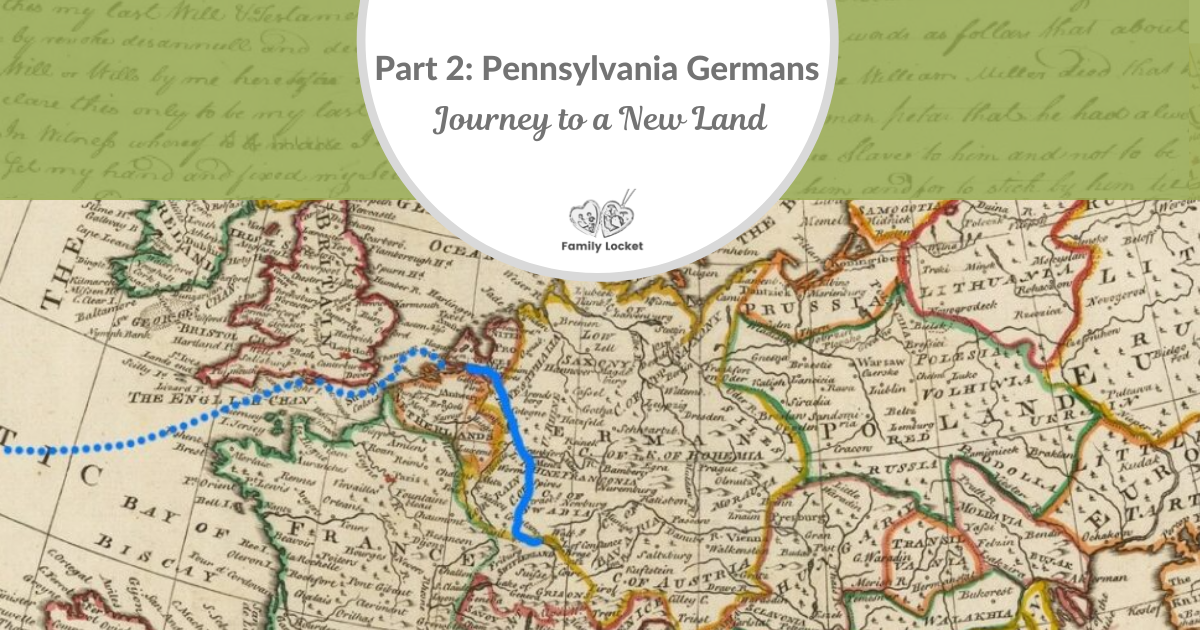
Most of the early Amish who later sailed for America came from Swiss German backgrounds — especially around Bern and other cantons — or from the German Palatinate and Alsace. They spoke dialects rooted in those regions: a blend of Swiss German influences and the Palatine German that would become the foundation of their American speech. So yes, when people ask “are the Amish German?”, the honest answer starts here: their bloodlines, their faith traditions, and their mother tongue all trace back to German-speaking Europe.
The Ocean Crossing and Pennsylvania’s Open Door
Imagine packing your entire life into a few trunks, saying goodbye to everything familiar, and stepping onto a creaking wooden ship for weeks of rough seas. That’s what many Amish and Mennonite families did in the late 1600s and throughout the 1700s. They weren’t chasing wealth or adventure — they were chasing the freedom to live their faith without fear.
William Penn, the Quaker founder of Pennsylvania, had a vision for his colony as a “holy experiment” — a place where people of different faiths could live in peace. He actively invited German-speaking Anabaptists and other persecuted groups. Word spread through letters and networks: Pennsylvania offered land, tolerance, and a chance to build communities on their own terms.
Most settled in what became known as Pennsylvania Dutch Country — Lancaster County and surrounding areas. They cleared forests, built farms, and recreated the tight-knit, faith-centered life they had known in Europe. Over generations, their German-speaking heritage mixed with the new American soil, but it never disappeared. That’s why today you can still hear echoes of those old dialects in everyday conversation among Amish families.
The “Dutch” Mystery — Why We Call Them Pennsylvania Dutch When They’re Not Dutch at All
Here’s where the confusion really kicks in. If you’ve ever asked “are the Amish German or Dutch?”, you’re tapping into a classic American mix-up that’s hundreds of years old.
When these immigrants arrived, they called their language Deitsch — which simply means “German” in their dialect. English-speaking neighbors heard that word and thought it sounded like “Dutch.” Back then, “Dutch” was sometimes used loosely for any German-speaking person (the Netherlands and Germany weren’t as neatly separated in popular imagination as they are now). The name stuck: Pennsylvania Dutch.
But make no mistake — they are not from the Netherlands. Dutch people from Holland speak a completely different language (Low German/Dutch), and their culture developed along its own path. The Amish and their fellow Pennsylvania Germans are High German in linguistic roots, specifically tied to the Palatine and Swiss German dialects of the Rhine Valley region.
It’s one of those linguistic accidents that still trips people up today. You ask “are the Amish German?” and the answer is yes — deeply so — even though the popular nickname says “Dutch.”
Pennsylvania German (Deitsch): The Heartbeat Language of Amish Life
Step onto an Amish farm or into a home on a quiet evening, and you’ll hear Pennsylvania German flowing naturally between family members. This is their heart language — the one used for daily life, storytelling, jokes, and raising children.
It’s not modern standard German from Berlin or Munich. It’s a living dialect that grew out of Palatine German, with Swiss German flavors mixed in from those early immigrants. Over time it picked up English words — especially for newer things like cars, phones, or machinery — because the Amish interact with the outside world for business and necessities. Linguists estimate English influence sits around 10-15% in vocabulary, but the grammar, sound, and core words stay rooted in that old German dialect.
If you speak standard German, you can often understand quite a bit of Pennsylvania German, especially if you listen carefully. It’s like hearing a strong regional accent or an older cousin dialect back in Europe. The reverse is also true — many Amish understand written or spoken High German better than you might expect, particularly the older forms used in their Bibles.
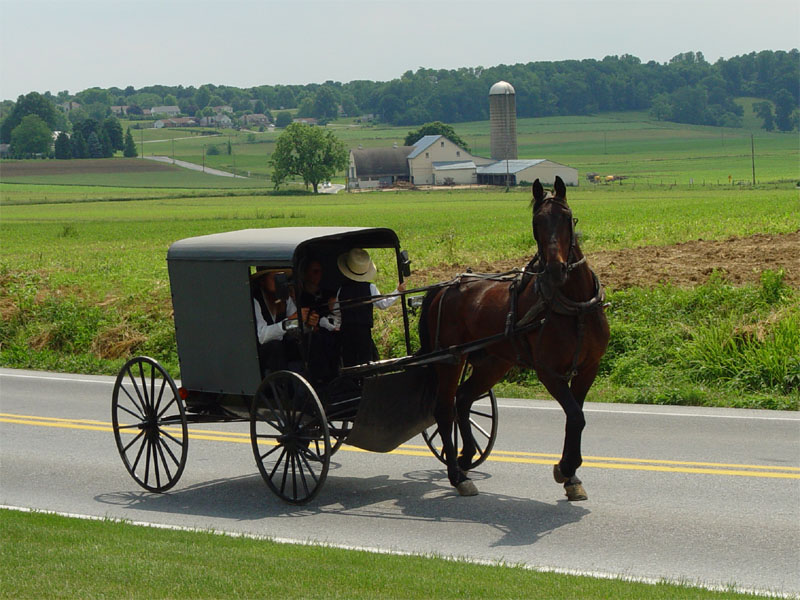
Children grow up speaking Pennsylvania German at home. They switch to English when they start school (usually a one-room Amish schoolhouse run by the community). This bilingual reality helps them navigate selling produce, buying supplies, or talking with doctors and neighbors — what they often call “the English” (meaning anyone outside their plain communities).
Church, Bible, and the Language of Faith
Walk into an Amish church service (always held in a home or barn, rotating between families) and the language shifts again. The Bible they read from is in High German — the old, formal language of Luther’s translation and centuries of Anabaptist worship. Sermons and readings often use this elevated form, while everyday talk among members might slip back into Pennsylvania German.
This creates a beautiful, layered linguistic world: Pennsylvania German for the warmth of home and community, High German for the sacred, and English for the practical outside world. It’s not confusion — it’s intentional preservation. Their faith has always been tied to these old words and the values they carry.
You can feel the conviction in how seriously they take this. Language isn’t just communication for them; it’s a thread connecting them to ancestors who crossed oceans and endured persecution so they could worship freely.
Holding On in a Fast-Changing World
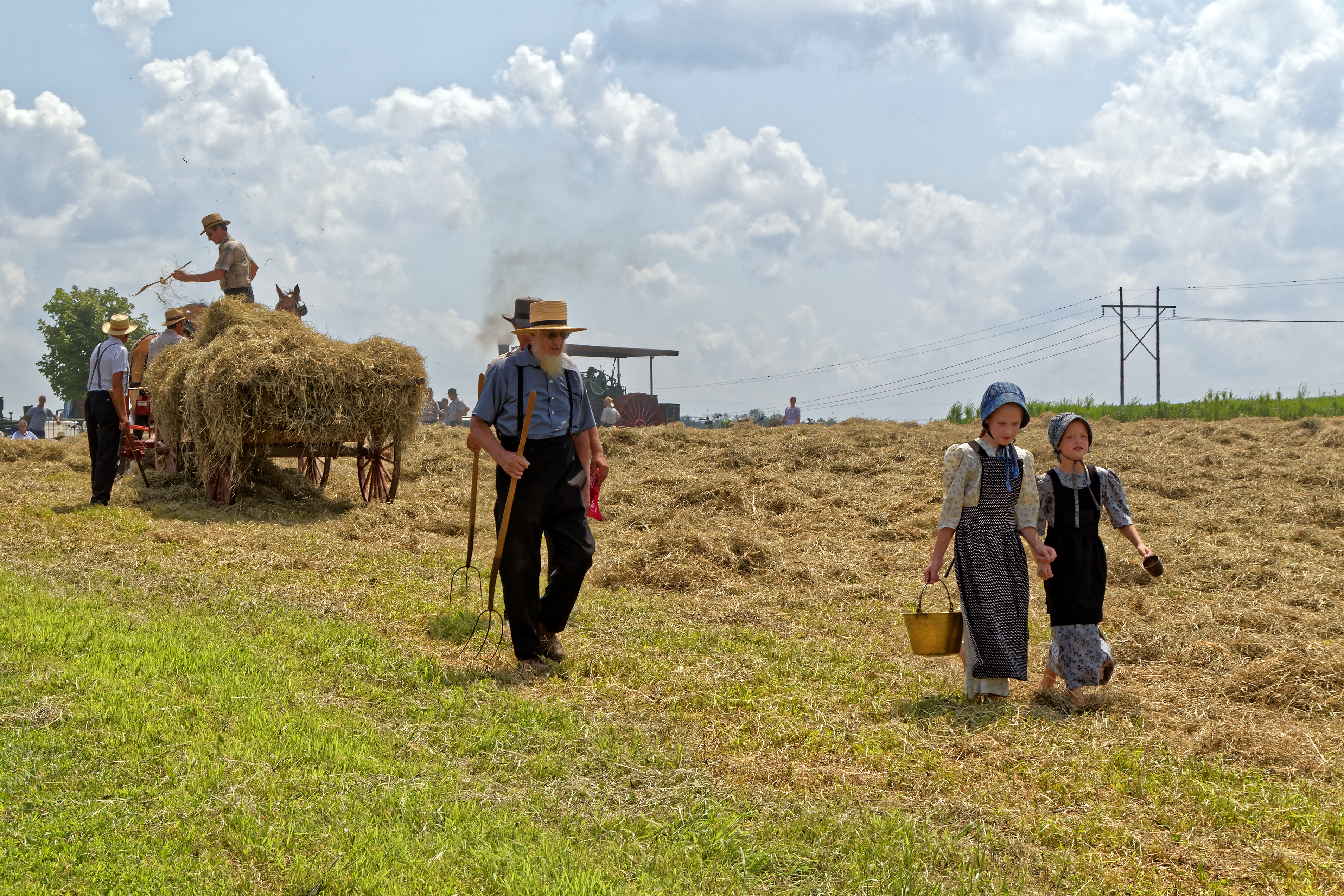
What strikes you most when you spend time learning about Amish life is their fierce commitment to staying rooted. While the world around them invented cars, electricity, smartphones, and endless entertainment, they kept choosing simplicity, face-to-face community, and separation from many modern distractions.
That choice flows directly from their German Anabaptist heritage — the same convictions that sent their ancestors fleeing Europe. They’re not frozen in time out of stubbornness; they’re protecting something they believe is worth protecting: faith, family, humility, and mutual aid.
You see it in the way they still speak their ancestral dialect at home. You see it in the plain clothes, the horse-and-buggy travel, the barn raisings where the whole community shows up. It’s living proof that a people can cross an ocean, build new lives in a strange land, and still carry their deepest identity forward for centuries.
Common Questions and Gentle Myth-Busting
People often ask: Do the Amish speak German? Yes — their own vibrant form of it. Can modern Germans understand them? Often yes, with some effort — it’s like strong dialects anywhere. Are all Pennsylvania Dutch people Amish? No. The term covers a broader group of German-descended folks in Pennsylvania, including Mennonites and non-plain “Dutch” families. The Amish are the most visible conservative branch. Did they come only from Germany? Their story weaves together Swiss, Palatine German, and Alsatian threads — all German-speaking regions of Europe.
The beauty is in the nuance. They are German in heritage and language roots, yet distinctly Amish in practice and identity. They became part of America’s great story while refusing to melt completely into it.
Why This Question Still Matters Today
When you dig into “are the Amish German?”, you’re really exploring something bigger: how identity survives migration, how faith shapes culture across generations, and how small communities can quietly model another way of living.
In a world that often feels loud, scattered, and obsessed with the next new thing, their steady presence offers a kind of quiet testimony. You don’t have to agree with every detail of their Ordnung (church rules) to respect the courage it takes to hold a line. Their story reminds you that roots matter — and that choosing what you keep is just as powerful as choosing what you leave behind.
So… Are the Amish German? The Full, Honest Answer
Yes — the Amish are German in their deepest heritage. Their ancestors came from German-speaking parts of Europe (especially Swiss German regions and the Palatinate), and they brought their language, faith traditions, and cultural patterns with them across the Atlantic. Pennsylvania German (Deitsch) is a direct descendant of those old dialects, still spoken daily in Amish homes and communities.
At the same time, they are something uniquely their own: a living Anabaptist community that has thrived in America for over 300 years while staying remarkably true to its founding convictions. They are not Dutch. They are not frozen relics. They are a people who decided, generation after generation, that some things are worth preserving — even when the world keeps changing around them.
If this story moved something in you — that longing for deeper roots, simpler rhythms, or stronger community — you’re not alone. Many of us feel it when we encounter lives lived with such quiet conviction.
The next time you see an Amish buggy or hear the soft cadence of Pennsylvania German, you’ll know the real story behind it. Their German roots run deep, but their Amish heart runs even deeper. And that’s what makes them so fascinating to people like you who are willing to look past the surface and ask the real questions.
Thanks for walking through this with me. If it sparked your curiosity about other hidden histories or intentional ways of living, keep exploring. The world is full of stories waiting to be understood — one honest question at a time.