Amish Religion: What It Really Means to Live a Faith-Filled Life of Simplicity and Conviction
If you’ve ever wondered about Amish Religion and the quiet power it holds for those who practice it, you’re tapping into something deeply human. It’s not just about buggies, bonnets, or saying no to electricity. Amish Religion is a full-hearted way of following Jesus that puts humility, community, family, and yieldedness to God above the endless chase for more speed, more stuff, and more noise.
You might be reading this because the Amish way of life caught your eye — maybe on a road trip, a documentary, or even while scrolling. That curiosity is beautiful. It shows you’re open to seeing faith lived out in ways that challenge our default settings. In the pages ahead, we’ll walk together through the real heart of Amish Religion: where it came from, what they actually believe, how those beliefs shape every ordinary day, and what timeless wisdom it might offer you right where you are. No judgment, no copying old articles — just honest, fresh exploration so you can understand and maybe even feel seen in your own search for meaning.
The Historical Roots That Shaped Amish Religion
Picture Europe in the 1500s. The Protestant Reformation is shaking everything up, but a group called the Anabaptists (“rebaptizers”) goes further. They insist baptism should be a conscious adult choice, not something done to babies. They read the Sermon on the Mount literally — love your enemies, turn the other cheek, don’t swear oaths or take up the sword. For this, thousands are hunted, drowned, burned, or beheaded. Their story of courage is preserved in a thick book called Martyrs Mirror that still sits in many Amish homes today.
Fast-forward about 160 years. A Swiss Anabaptist leader named Jakob Ammann feels the church is getting too comfortable with the world. In 1693 he pushes for stricter discipline: foot-washing during communion (a sign of servant-hearted love), communion twice a year, plain dress that doesn’t show off status, untrimmed beards for married men, and serious shunning (Meidung) of anyone who breaks their baptism vows and refuses to repent.
Not everyone agrees. The split happens. Ammann’s followers become known as the Amish. Many later cross the ocean to Pennsylvania and other parts of North America seeking peace to live their convictions without persecution. Those who stayed in Europe mostly blended back into Mennonite groups. Today, nearly all Amish people live in the United States and Canada — a direct result of that early choice to stay separate and stay faithful.
This history isn’t dusty trivia. It explains why Amish Religion still carries such a strong emphasis on adult commitment, community accountability, and gentle but firm separation from whatever the surrounding culture prizes most. They didn’t invent these ideas; they simply refused to let them fade.

Core Beliefs That Anchor Amish Religion Every Day
At its center, Amish Religion is solidly Christian and Anabaptist. They believe the Bible is God’s inspired Word and try to live it literally, especially the teachings of Jesus. Salvation comes by grace through faith, but that faith shows itself in a surrendered life.
Here are the pillars you’ll see lived out:
- Adult baptism and voluntary church membership: No one is born Amish in the spiritual sense. Young people usually decide between their late teens and early twenties. They take classes, then publicly kneel and vow to follow Christ and the community’s way. It’s a big, lifelong promise.
- Non-resistance and peace: Lawsuits are rare. Military service is avoided. They believe Jesus calls His followers to a different kingdom that doesn’t rely on force.
- Gelassenheit (yieldedness): This beautiful German word captures the heart of Amish spirituality — surrendering your own will, your pride, and your personal agenda to God and to the good of the community. Humility isn’t weakness; it’s strength under control.
- Separation from the world: Not hatred of outsiders — Amish people are generally kind and generous — but a deliberate choice not to let modern culture’s values (individualism, constant entertainment, status symbols) pull them away from what matters most.
- Community over self: Mutual aid runs deep. When someone’s barn burns, the whole district shows up to rebuild it — often in a single day. No one carries insurance the way most of us do; the church family is the safety net.
These aren’t abstract doctrines. They’re the soil everything else grows from.
The Ordnung — The Living Guide of Amish Religion
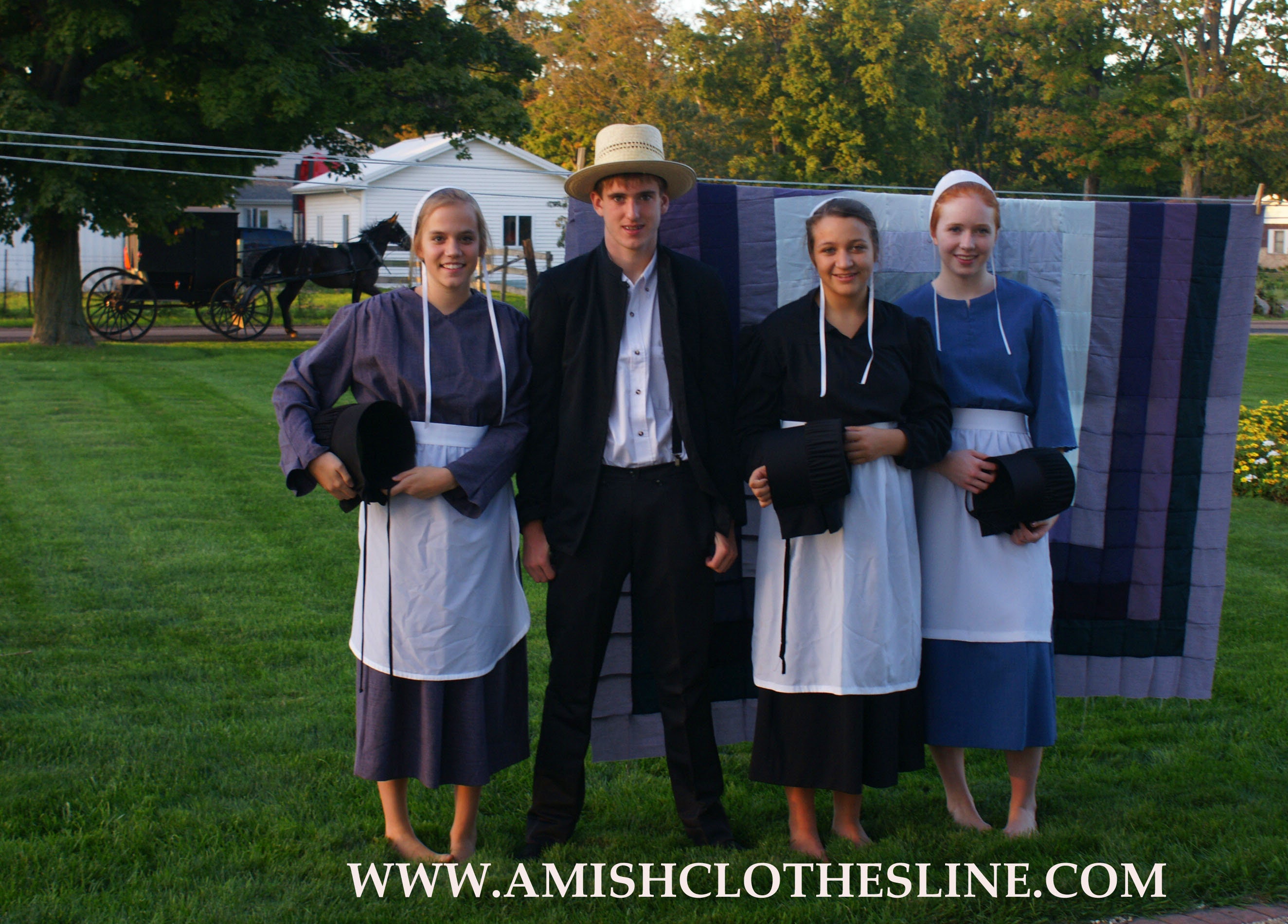
Every church district has its own Ordnung — an unwritten (sometimes partly written) set of expectations that turns beliefs into daily practice. It covers clothing styles, buggy design, technology limits, hair length, how you greet people, and a hundred other small things.
Why so detailed? Because little choices shape the soul. Plain dress removes competition and vanity. Limited technology protects family time and keeps pride in check. The goal isn’t legalism for its own sake; it’s creating an environment where faith can actually flourish without constant distraction.
Different groups interpret the Ordnung differently. That’s why you’ll notice some Amish communities look stricter than others. The conversation about what fits and what doesn’t is ongoing and usually happens face-to-face in the community, not on social media.
How Amish Religion Shapes Ordinary Days and Family Life
Imagine waking up before sunrise in a home without glowing screens. Chores come first — milking, feeding animals, gardening, cooking from scratch. Children learn responsibility young by helping with real work. Meals are eaten together. Evenings often mean reading, storytelling, board games, or visiting neighbors.
Work itself becomes worship. Farming, woodworking, quilting, and small businesses are done with excellence because “whatever you do, work at it with all your heart, as working for the Lord.” Barn raisings are famous examples — hundreds of hands turning a pile of lumber into a finished barn while women prepare mountains of food. It’s faith with calluses on its hands.
Family is central. Large families are common (six or seven children on average), and multi-generational living or close proximity is normal. Grandparents often live on the same property or nearby, passing on stories and values naturally.
Rumspringa — the “running around” season that starts around age 16 — is probably the part that surprises outsiders most. Teens get more freedom to experience the world outside. Some drive cars, wear English clothes, or go to parties. The point isn’t to encourage rebellion; it’s to let them make an informed, adult choice about whether they truly want to be baptized into the church. The vast majority — around 80-90% — eventually return and join. That’s a powerful testimony to the pull of family, faith, and belonging.
Worship, Baptism, and the Rhythms of Amish Religious Life
Church happens every other Sunday in someone’s home or barn. Benches are brought in, men sit on one side, women and children on the other. Services last three hours or more. There are no instruments, no stage lights, no paid pastor. Instead you’ll hear slow, unison singing from the old Ausbund hymnal (some hymns written by martyrs in prison), Scripture reading, and sermons that can stretch long because the goal is feeding the soul, not entertaining.
Baptism is usually by pouring while the person kneels. It’s public, emotional, and followed by a lifetime of accountability. Communion services twice a year include foot-washing — a humbling reminder that greatness in God’s kingdom looks like serving others.
Weddings are simple and joyful, often held on a weekday after harvest season. Funerals focus on hope and community support rather than elaborate displays. In every season, the church gathers around its people.
Amish Religion Today — Growth, Variations, and Gentle Adaptation
There are roughly 400,000 Amish people across hundreds of settlements, mostly in Pennsylvania, Ohio, and Indiana, and the population is growing quickly thanks to large families and strong retention.
Not every group looks exactly the same. Old Order communities tend to be the most conservative with technology and dress. New Order groups are sometimes a bit more open to certain tools while keeping core convictions. Beachy Amish and Amish Mennonite groups may use cars and electricity yet still hold to believer’s baptism and plain living. The common thread? A desire to live out Amish Religion faithfully in their particular context.
Modern pressures exist — rising farmland costs, tourism, health challenges in closed communities, and the ever-present temptation of convenience. Yet many Amish are thoughtfully adapting: solar panels for certain needs, shared phone shanties, or small businesses that serve both their community and outsiders. The compass remains the same: Does this help or hurt our walk with God and our life together?
What Amish Religion Can Teach You (Even If You Never Drive a Buggy)
You don’t have to adopt every Amish practice to learn from them. Their way of life quietly asks powerful questions:
- What if you protected your family’s attention like it was sacred?
- What if humility and yieldedness replaced constant self-promotion?
- What if your community was strong enough that people didn’t need to face crises alone?
- What if faith wasn’t just a Sunday compartment but the lens for every decision?
In a world that rewards speed and spectacle, Amish Religion offers a different rhythm — one where presence matters more than productivity, where people are more important than platforms, and where peace comes from trusting God instead of controlling everything.
You can start small. Turn off notifications for an evening. Eat a meal without screens. Choose to forgive instead of winning an argument. Build real friendships that go deeper than likes and comments. These aren’t Amish rules; they’re universal invitations to a richer life.
Frequently Asked Questions About Amish Religion
Do the Amish believe in Jesus? Absolutely. Jesus is central — His life, teachings, death, and resurrection shape everything.
Can someone from outside join the Amish church? It’s uncommon but possible. It usually requires genuine conviction, learning the language and culture, and being accepted by a district after a long process.
Why don’t they use electricity or cars? It’s not hatred of technology itself. They evaluate every tool by whether it strengthens or weakens family, community, and humility. Many allow carefully limited modern conveniences that serve practical needs without opening the door to worldliness.
Is shunning cruel? It’s meant to be a loving (though painful) call to repentance for baptized members who break serious vows. Strictness varies by group and situation. Family relationships are often maintained in limited, careful ways.
Are the Amish a cult? No. Membership is voluntary and adult. They hold historic Christian beliefs. While commitment is high, people are free to leave (though it comes with social consequences in stricter groups).
Do Amish kids go to school? Most attend one-room Amish schools through eighth grade. The focus is on practical skills, reading, writing, arithmetic, and character. Higher education is rare because it’s seen as a potential source of pride and separation from the community.
Walking Away with Fresh Eyes on Amish Religion
Amish Religion isn’t a museum piece or a set of quirky rules. It’s a living, breathing attempt to follow Jesus with wholehearted simplicity in a complicated world. The people who live it aren’t perfect — no one is — but their steady witness invites all of us to pause and ask: What am I building my life around? What would it look like to choose yieldedness, community, and quiet faithfulness over the loud demands of our age?
Thank you for spending this time exploring with me. If something here stirred your heart or answered a question you’ve carried, I’d love to hear about it. Maybe share this with a friend who’s also curious. And remember — the most important journey isn’t about copying someone else’s path. It’s about walking your own with the same kind of courage and conviction the Amish have shown for centuries.
May your own faith, whatever it looks like, grow deeper, simpler, and more rooted in what truly lasts. You’re not alone in wanting more than the surface. Keep seeking. Keep choosing what matters.
That’s the real invitation behind every discussion of Amish Religion.