The Amish Blue Door: What It Really Meant in My Lancaster County Home – Reflections from Someone Who Left
I still remember the exact shade of blue on the front door of our neighbor’s house in Lancaster County. It wasn’t a bright sky blue or a soft pastel. It was a deep, steady navy that stood out against the white siding like a quiet promise. Every time our family drove past in the buggy on the way to church or market, that blue door caught my eye. It looked the same year after year, through every season, every barn raising, every quiet Sunday.
My name is Naomi Rose Miller. I grew up Old Order Amish, left the community at 28, and now at 29 I write and speak about the journey of finding your own path after a life shaped by tradition. The Amish blue door is one of those small but powerful details that stayed with me long after I stepped away. It wasn’t just paint on wood. It carried meaning about faith, belonging, hospitality, and the careful line we walked between standing apart from the world and welcoming others into our midst.
In this post I want to share what the blue door meant in the homes I knew, including the one I grew up in, and what it stirs in me now as someone who still loves much of my heritage while choosing a wider life for myself and my children, Emma and Ethan.
Why the Color Blue Held Such Weight
Blue has always felt like a sacred color in our faith tradition. I remember my mother Sarah teaching us Bible stories while we worked in the garden or sat around the table. She would speak softly about the tabernacle in Exodus, how God instructed Moses to use blue in the curtains, the priestly garments, and the cords on the tassels. Blue reminded the people of heaven, of holiness, of the commandments they were to keep close to their hearts.
That teaching stayed with me. When I saw a blue door on a white Amish house, it felt like a visible echo of those ancient instructions. It said, without words, that this home belonged to people trying to live set apart yet faithful. Some in our community spoke of blue as a sign of purity and spiritual striving. Others simply liked the way it looked against the whitewash and the green fields. Both could be true at the same time.
I have heard people say the blue door helps a house blend with the sky or signals prosperity and God’s protection. In my experience it did something quieter. It marked the home as a place of order and welcome at once. When visitors came—whether family from another district, a new family moving in, or even the occasional curious outsider—the blue door stood out as a landmark. It said, “You have found us. Come in if your intentions are good.”
My father Jacob never talked much about symbolism. He was a quiet man who showed his faith through steady work and well-kept buildings. But I noticed how carefully he maintained our own front door, even if it wasn’t painted blue. The wood was always oiled, the hinges tight, the threshold swept. That care mattered. The blue door, when it appeared on other homes, carried the same spirit of respect.
Did Every Amish Home Have a Blue Door?
No. And that mattered more than I realized as a child.
In our Lancaster settlement some families painted their doors that particular deep blue. Others kept them white or a soft gray. It was never a rule written in the Ordnung that I knew of. It was more like a gentle custom that spread because it felt right to many people. My own family home had a simple white door with clean lines. I sometimes wondered why we didn’t have the blue one. My mother once told me, in one of her quiet, encouraging ways, that the color of the door did not make the faith inside the house. She said it with a small smile that let me know questions were allowed, even if they were rarely spoken out loud.
That small conversation stayed with me for years. It was one of the first times I understood that not every Amish family expressed their beliefs in exactly the same visible way. Some chose the blue door as a clear marker. Others expressed their commitment through the neatness of the garden, the strength of the barn, or the warmth of the quilt on the bed. The blue door was one beautiful option among several, not a requirement.
This freedom within the larger commitment to plain living felt important to me even then, though I didn’t have words for it yet. Later, when my own questions grew louder, I would think back to that white door on our house and the blue doors on others. Both could be faithful. Both could be home.
The Blue Door and Daily Life in Our Community
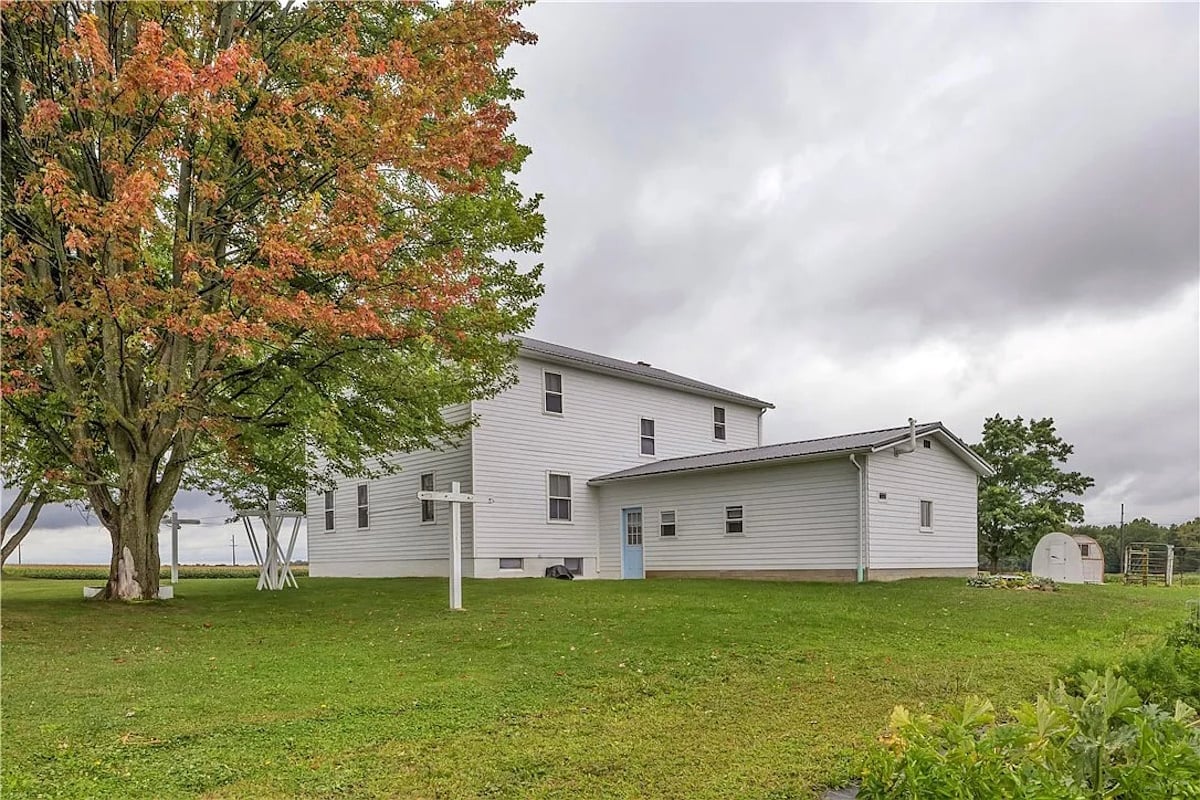
Walk down almost any back road in our part of Lancaster and you would see the pattern: white houses, dark roofs, and here and there that distinctive blue door catching the light. It became a kind of quiet map. When I was a girl visiting my closest friend Ruth Stoltzfus, her family’s blue door always made the house feel extra welcoming. We would sit on the porch steps after chores, talking about everything and nothing while the blue paint glowed in the afternoon sun.
Quilting afternoons with Ruth, Miriam King, and a few other women often happened in homes with blue doors. The color seemed to fit the careful, beautiful work we did with our hands. Blue thread sometimes appeared in the quilts themselves, tiny stitches that tied pieces of fabric into something lasting. The same color that marked the outside of the house could appear inside in small, meaningful ways.
My brother David, who became a carpenter, sometimes helped with door repairs or new construction on neighboring farms. He spoke once about how a well-hung door, painted carefully, showed respect for the family inside and the visitors who would cross the threshold. That practical view mixed with the deeper symbolism for me. The blue door was both a spiritual marker and a piece of good workmanship.
Even during courting years, when I spent time with young men from our community—including the one who would become my husband, Sam Fisher—the blue doors of family homes felt like part of the landscape of belonging. They signaled stability and tradition. Sam valued those things deeply. I respected that in him, even as my own heart began to wonder what lay beyond the familiar white houses and blue doors.
Biblical Roots and the Color That Pointed Upward
The Bible references to blue stayed with me long after I left. In the stories my mother shared, blue appeared in the most holy places—the tabernacle curtains, the high priest’s robe with its pomegranates of blue, the tassels on garments meant to remind people of God’s commands. Blue was not ordinary. It pointed toward heaven and holiness.
When Amish families chose blue for their doors, they were reaching back to that ancient language. The door became a small, daily reminder that the home was meant to be a place of reverence. It also reminded those inside to live with humility and to keep their hearts turned toward what mattered most.
I still feel the beauty of that intention. There is something powerful about letting your surroundings speak of your deepest beliefs. The blue door did that without needing words. It said the people here are trying to honor God in the ordinary details of life—farming, baking, raising children, welcoming neighbors.
At the same time, I have come to believe that symbols only hold the meaning we give them. A blue door can point to heaven, but it cannot replace the daily work of living with love and honesty. That realization helped me when I began to ask bigger questions about the rules that shaped us.
Who Painted the Doors and Why It Mattered
In the homes I knew, the men usually took on the task of painting the blue door. It was careful work. My father would have approached it the same way he approached every job—with patience and attention to detail. A good paint job meant no drips, even coverage, and a color that would last through Pennsylvania winters and summers.
Some families did the work together. I remember hearing stories of fathers and sons or even mothers and daughters helping with preparation and cleanup. The act of painting became another way of caring for the home and, by extension, the faith that home represented.
There was pride in a well-kept blue door, but it was a quiet pride. It did not boast. It simply said, “We take care of what God has given us.” That spirit of stewardship is one of the things I still carry with me and try to teach my own children, Emma and Ethan.
The Blue Door After I Left
When I made the decision to leave at 28, I did not take a blue door with me. I took my children, a few precious quilts, and the values that had shaped me—hard work, simplicity, faith, and love of family. I also carried questions and a measure of guilt that still visits me some days.
Driving past the old community now, I still notice the blue doors. They look the same. The houses are still white, the fields still green, the buggies still moving steadily along the roads. For a moment I feel the pull of belonging. Then I remember why I chose a different path. The blue door no longer marks the boundary of my world, but it still marks a world I understand and respect.
My friend Michael Carter, who knew me when I was younger and reconnected after I left, helped me make sense of those mixed feelings. He listened without judgment when I described driving past a blue door and feeling both homesick and free at the same time. He reminded me that honoring your past does not mean staying inside every boundary it set.
Today, when Emma asks about the blue doors she sometimes sees on our drives, I tell her the stories. I tell her about the color that reminded people of heaven and holiness. I tell her about the hospitality those doors offered. And I tell her that every family, every person, gets to decide how they will mark their own home and their own faith. That freedom is something I want her and Ethan to grow up knowing they have.
What the Blue Door Still Teaches Me
I no longer live inside the world the blue door defined, but the lessons remain.
It taught me that small, visible choices can carry deep meaning. The color we paint a door, the way we keep our thresholds clean, the welcome we offer—these things shape how we move through the world and how others experience us.
It taught me that tradition and personal conviction can sit side by side. Not every family painted their door blue. Not every person who painted it blue felt exactly the same way about every rule. There was room inside the larger commitment for quiet differences. That room matters.
It taught me that symbols are powerful, but they are not the whole story. A blue door could signal faith, unity, and hospitality. It could also, at times, signal the pressure to conform that made some of us feel we had to hide our questions. Both truths lived in the same color.
Most of all, it taught me that home is not only a place with a certain color on the door. Home is the people you choose to love and the values you choose to carry, whether you stay inside the community that raised you or step beyond it.
A Quiet Invitation
If you are reading this because you grew up around blue doors and white houses, or because you are curious about the quiet symbols that shape Amish life, I am glad you are here. These details—the blue door, the plain clothing, the handcrafted furniture I wrote about before—are not just interesting facts. They are the physical poetry of a people who decided to live differently on purpose.
I still believe in much of what those blue doors stood for: faith that shows up in ordinary work, hospitality that opens the door to others, simplicity that protects what matters most. I also believe that questions are allowed, that women’s voices deserve space, and that personal choice and genuine faith can walk together.
My life motto has not changed: “The hardest journey wasn’t leaving the Amish community. It was learning who I was after I left.”
The blue door remains part of my story. It marks the homes I came from and the faith that still lives inside me, even as I build a new kind of home for my children—one where they can ask about the color of doors and the shape of their own futures.
Thank you for walking through this reflection with me. If the Amish blue door has touched your life in any way, or if you are navigating your own questions about tradition and belonging, I would be honored to hear your story too. We are all finding our way home, one threshold at a time.