Amish Values: What They Reveal About Living With Purpose in Today’s World
Amish values run deep in a community that quietly chooses connection over chaos, faith over fame, and enough over endless more. If you’ve ever felt the ache of scrolling through a life that looks perfect on screen but feels hollow in your chest, these values might be the mirror you didn’t know you needed.
You don’t have to move to Lancaster or Holmes County to feel their pull. Amish values speak to something universal in all of us—the longing for peace that doesn’t depend on the next notification, for family that actually shows up, and for a rhythm of life that lets your soul breathe again. Let’s walk through them together, like two friends talking on a porch at dusk, no rush, just honest words.
The Heartbeat of Amish Values: Unwavering Faith
At the center of everything the Amish do sits a steady, surrendered faith in God. It’s not a Sunday outfit or a quick prayer before meals. It’s the quiet force that shapes how they wake up, how they work, how they forgive, and how they face both harvest abundance and heartbreaking loss.
You can see it in the way they accept God’s will without fighting every hard thing. When crops fail or illness comes, the first words you’ll often hear aren’t “Why me?” but a simple “God knows best.” That kind of trust doesn’t come from ignoring pain. It comes from believing that the same God who holds the universe also holds their story. There’s a beautiful freedom in that—freedom from the exhausting need to control outcomes that were never yours to control anyway.
This faith shows up in daily rhythms most of us have forgotten. Morning and evening devotions as a family. Church every other Sunday in someone’s home or barn, with singing that rises straight from the heart, no instruments, just voices blending on hymns written hundreds of years ago. The sermons aren’t entertainment; they’re nourishment for the soul. And when a young person decides to be baptized as an adult, it’s not a family tradition they’re forced into. It’s a choice made after they’ve seen the outside world and still said, “This is where I belong.”
What moves me most about this piece of Amish values is how it turns ordinary days into offerings. A man plowing behind horses isn’t just working the land—he’s worshiping with his hands. A mother kneading bread isn’t just feeding bodies—she’s teaching her children that simple work done with love matters to God. You don’t need a stage or a spotlight. You just need a willing heart and hands that serve.
If you’re carrying anxiety about the future right now, or if you’ve been chasing peace in all the wrong places, their example offers something rare: permission to exhale. You don’t have to have it all figured out. You just have to keep showing up, trusting that the One who started your story is faithful to finish it.
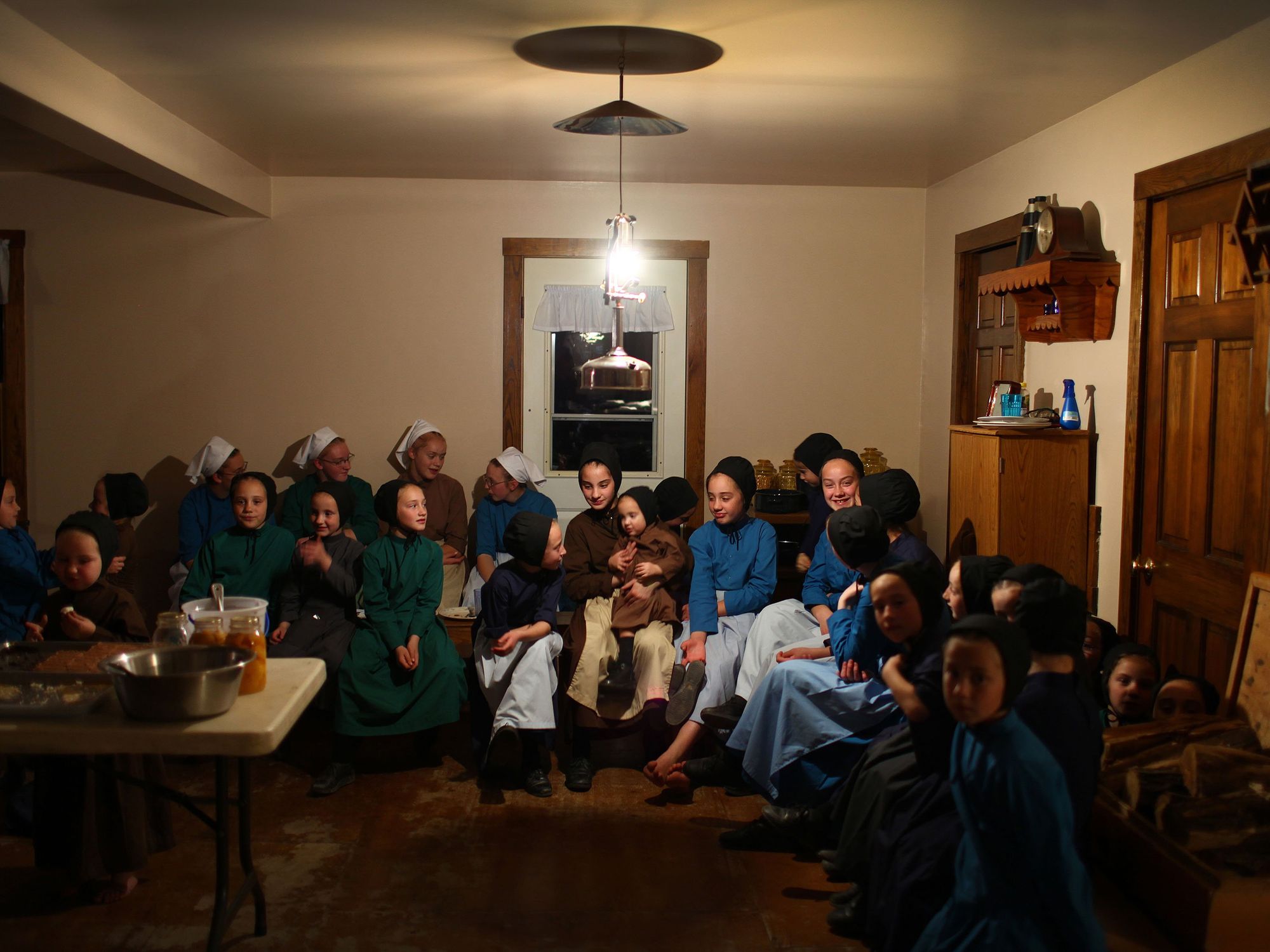
Amish Values in Action: The Sacredness of Family
Right after faith comes family, and in Amish values the two are tightly woven. The home isn’t just where you sleep—it’s the primary place where faith gets lived out loud, passed down, and protected.
You feel it the moment you step into an Amish kitchen. The table is long, the food is plentiful, and the conversation actually happens. No phones at meals. No one half-listening while scrolling. Everyone is there—present, laughing, sometimes disagreeing, but always together. Children grow up knowing they belong to something bigger than themselves. They’re not the center of the universe; they’re part of a story that started long before them and will continue long after.
Large families are common because children are seen as blessings, not expenses or inconveniences. Eight or ten kids around the table isn’t chaos to them—it’s normal life, full of extra hands for chores and extra hearts to love. Parents teach by doing, not just by talking. Boys learn to work alongside their fathers in the shop or field. Girls learn the rhythms of home and often a craft they can carry into their own future families. Education in one-room schoolhouses focuses on reading, writing, arithmetic, and character. By eighth grade, most are ready to apprentice in real work that builds both skill and responsibility.
Marriage is treated as a lifelong covenant, not a contract you can cancel when feelings fade. Courtship is purposeful and protected. Young people get to know each other in group settings first—singings, frolics, church events—where character shows more clearly than chemistry alone. When a couple marries, the whole community celebrates, often for two days. And when hard seasons come (and they do), the extended family and church walk alongside them instead of leaving them to figure it out alone.
If you’re a parent who feels pulled in a thousand directions, or if your own family feels more like a group of roommates than a team, Amish values offer a quiet challenge: What if presence mattered more than perfection? What if the most important thing you gave your children wasn’t the latest gadget or the best school, but the memory of working together, praying together, and laughing around a table with no screens between you?
There’s dignity in the roles too. Men lead with responsibility and servant-hearted strength. Women manage the heart of the home with wisdom and creativity—many even run small businesses selling quilts, baked goods, or crafts. The goal isn’t sameness; it’s harmony that points back to honoring God in every relationship under that roof.

Building Community Through Amish Values of Service
Amish values come alive most vividly when the whole settlement moves as one. “Love your neighbor” isn’t a nice idea on a wall plaque. It’s fifty or a hundred people showing up at sunrise with hammers, saws, and food to raise a barn for a family who needs it. By sunset the structure stands, the work is done, and no one sends an invoice. That’s just what neighbors do.
Mutual aid runs through every part of life. When medical bills pile up or a fire destroys a home, the church doesn’t pass a collection plate once—they keep showing up with money, labor, meals, and comfort until the family is back on their feet. No one has to navigate insurance paperwork alone. The people around you have already decided you’re not alone.
This spirit of service shows up in quieter ways too. Visiting the sick and elderly is normal. Quilting circles and canning bees aren’t just social events—they’re practical ways to care for one another. Young people learn early that their gifts and strength belong to the community, not just to themselves. And when someone strays or struggles, the response is often patient discipline meant to restore, not to shame.
You might wonder how they stay so tight-knit while still living in the modern world. They pay taxes. They follow most laws. Many run successful businesses that serve customers far beyond their community. But they draw clear lines around technology, entertainment, and influences that could pull hearts away from faith and family. That separation isn’t about superiority. It’s about love—love for the values that have kept them grounded for generations.
If you’ve ever felt lonely in a crowd, or if your neighborhood feels more like a collection of strangers than a real community, Amish values have something tender to offer you. It starts with deciding to be the person who shows up. The one who helps without being asked. The one who makes space at the table for someone who’s struggling. Those small acts, repeated, become the kind of belonging most of us secretly crave.
Embracing Simplicity: A Core Amish Value That Frees the Soul
One of the most striking Amish values is their commitment to simple living. Not because they’re against progress, but because they’ve seen what too much stuff and too much speed can do to a human heart.
No electricity humming through the walls means no constant glow of screens stealing attention at night. Horse-and-buggy travel keeps life at a human pace—you notice the sky, the fields, the person riding beside you. Plain dress isn’t about looking plain; it’s about refusing to let clothing or status become the measure of your worth. The Ordnung—the agreed-upon guidelines that grow out of their values—helps each community decide together what stays and what gets left behind.
You can feel the difference when you spend time around people who live this way. There’s less comparison, less frantic upgrading, less anxiety about keeping up. Evenings often end with stories by lantern light, board games, or simply sitting together after a long day of work. The “boredom” that modern life tries so hard to cure turns out to be fertile ground for real conversation, creativity, and rest.
Young people get a taste of the faster world during rumspringa, and many still choose to come back. They’ve seen the glitter. They’ve felt the pull. And they’ve decided the quieter path offers something deeper—roots, belonging, and a clear conscience before God.
If you’re exhausted from the race you never agreed to run, Amish values extend a gentle invitation: What if you chose less on purpose so you could have more peace? What if you turned off the noise for a few hours each evening and let your mind settle? What if you measured success by the quality of your relationships instead of the quantity of your possessions?

What Amish Values Can Teach You Right Where You Are
You don’t need to wear a kapp or drive a buggy to let these values reshape your life. The principles travel well.
Start with faith—whatever that looks like for you. Make space for stillness. Pray or reflect before the day rushes in. Practice surrender with the small things so you’re ready when the big waves come.
Protect family time like it’s sacred, because it is. Put the phones in a basket at dinner. Ask real questions. Listen without fixing. Work alongside your kids instead of just managing their schedules. Create traditions that say “we belong to each other.”
Look for ways to serve without keeping score. Help a neighbor with a project. Bring a meal to someone who’s hurting. Show up to the hard things. Community grows one act of quiet faithfulness at a time.
And simplify where you can. One evening a week with no screens. One closet cleaned out. One purchase delayed while you ask, “Do I really need this, or am I trying to fill something that only presence can satisfy?”
The beauty of Amish values is that they don’t demand perfection. They invite you back to what matters most, one small choice at a time.
The Enduring Wisdom of Amish Values
When you step back and look at the whole picture, Amish values shine as a steady light in a noisy, hurried world. They remind you that faith can be lived in muddy boots and quiet kitchens. That family is worth protecting with your time and your presence. That community grows when people serve without applause. And that simplicity isn’t about having less—it’s about making room for more of what actually lasts.
You don’t have to copy their life to borrow their wisdom. You just have to ask honest questions: Where am I chasing what won’t satisfy? Who needs me to show up today? What can I lay down so my soul can finally rest?
These guiding principles from Amish life aren’t meant to make you feel guilty. They’re meant to make you feel hopeful. Hopeful that a different way is possible. Hopeful that the things you long for—peace, connection, meaning—are still within reach when you choose them on purpose.
Thank you for letting these words land in your heart. If something here stirred you, hold onto it. Maybe share it with someone who’s also tired of the noise. And remember: the same God who sustains the Amish community is ready to walk with you, right where you are, as you take one small step toward the kind of life your soul was made for.
The quiet strength of Amish values is still available. All you have to do is slow down long enough to hear it.